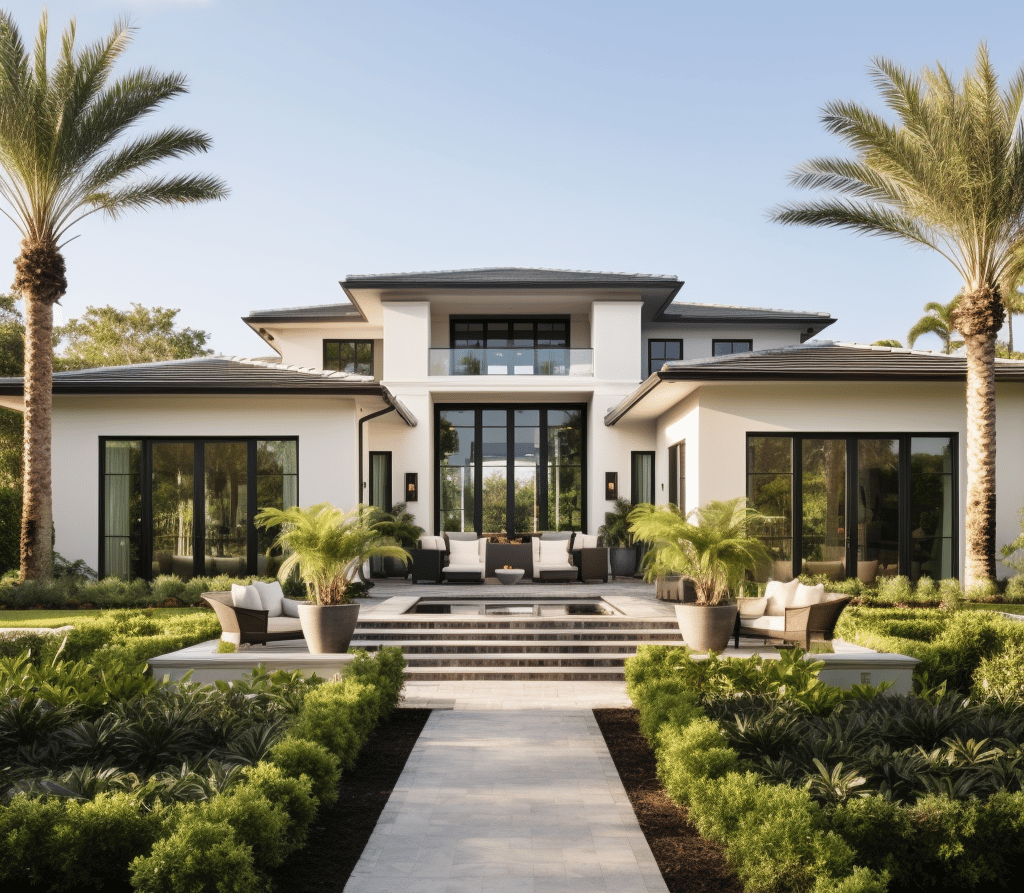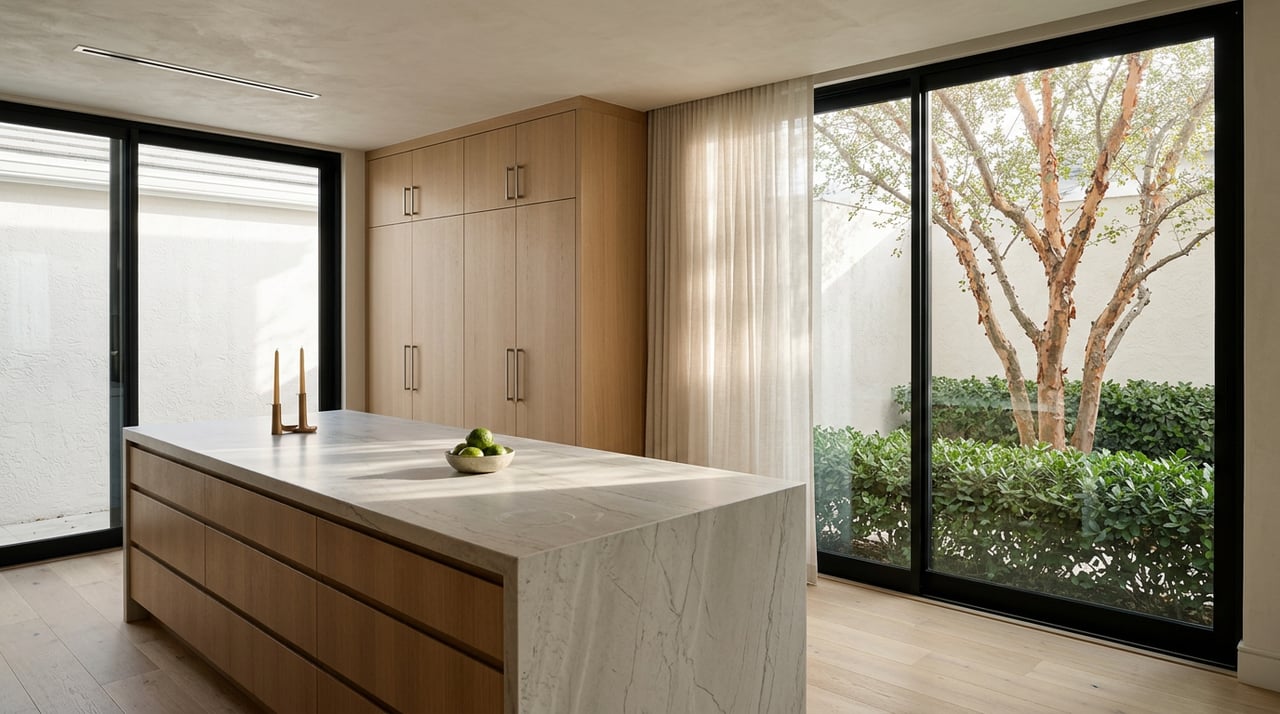
On February 12, 2026, a construction crew stood on the top floor of a rising tower at the southwest corner of Griffin Road and State Road 7 and hoisted the final structural beam into place. That beam marked the topping out of phase one of The District in Davie, a $1 billion, 2.8-million-square-foot project that will eventually hold roughly 1,292 rental units across five towers between 21 and 24 stories. More than 400 workers have touched the job so far. A few miles away, on the other side of town, a different kind of construction is happening on half-acre and acre lots where fences get built around paddocks instead of parking garages.
Buyers comparing Davie to Weston or Southwest Ranches often assume the town is becoming one thing: denser, more urban, less rural. The data says something more specific. Davie is becoming two things at once, and the line between them isn't market sentiment. It's zoning code that hasn't been rewritten since 2003.
A corridor adding close to 2,000 units
The District isn't the only large rental project moving through Davie's east side. Along the same Griffin Road corridor, Estate Companies has been assembling land for a second multifamily push, an eight-story, 353-unit building on 2.5 acres and a companion eight-story, 310-unit building on an adjacent 2.6 acres, tentatively branded Soleste Reserve I and II. Combined with The District's 1,292 units, that's close to 2,000 rental apartments converging on the Griffin Road and State Road 7 corridor within the same few years.
The District alone brings 36,000 square feet of restaurant and retail space and roughly 2,650 parking spaces built into 1.1 million square feet of structured parking. This is not incremental infill. It's the kind of density that reshapes traffic counts, retail leasing, and the rental supply curve for an entire submarket, and it's arriving on land that used to hold a shopping center, not on land carved out of Davie's acreage neighborhoods.
That distinction matters more than it sounds like it should.
A zoning line that hasn't moved since 2003
Davie's code of ordinances, most recently recodified through Ordinance No. O2025-034 in November 2025, still carries language written more than two decades earlier that draws a hard boundary around where horses and livestock can legally live. The town's own code states plainly that keeping horses, cattle, goats, sheep, poultry, and rabbits
"is not permitted in any residential zoning district, except for RR, AG, A-1, and R-1."
That's it. Four zoning designations, out of everything Davie has on the books, where animal-keeping is allowed as a matter of right. The apartment corridor rising at Griffin and State Road 7 sits in commercial and mixed-use zoning that was never eligible for horses in the first place. The half-acre and one-acre lots on the west side sit inside RR, AG, A-1, or R-1 precisely because that's the only zoning that permits the lifestyle those lots are built around.
This is the part buyers researching "Davie versus Weston" or "Davie versus Southwest Ranches" tend to miss. The apartment boom isn't competing with west Davie's acreage stock for land. It legally can't. A developer cannot rezone a Long Lake Ranches half-acre lot into a 24-story tower any more than El-Ad National Properties could have built The District's 1,292 units on an A-1 parcel zoned for a single horse barn. The two markets are walled off from each other by code, not by convenience.
What the blended median is hiding
Anyone pulling up Davie's median home price right now is looking at a number that quietly averages two very different products. In Q1 2026, Davie's overall median sale price came in at $504,000, down 8.4 percent year over year, with 226 transactions for the quarter, a 6.2 percent drop from the prior year. But that blended figure folds together single-family houses and condos, and those two categories are not moving the same direction.
| Segment | Q1 2026 median | Year-over-year change |
|---|---|---|
| Davie, all sales | $504,000 | -8.4% |
| Davie, houses only | $600,000 | -12.9% |
| Davie, condos only | $220,000 | roughly flat |
| Broward County, all sales | $420,000 | — |
Davie's house-only median sat at $600,000, well above the countywide figure of $420,000, while condos held near $220,000 and stayed essentially flat. The median price per square foot for the town landed at $312, down 1.6 percent year over year. Read those numbers separately and a clearer picture emerges: Davie's single-family stock, the category that includes the acreage and equestrian lots on the west side, is pricier and pulling in a different direction than the condo segment that the coming apartment supply will eventually echo in the rental market.
A townwide median doesn't distinguish between a condo unit inside a new mixed-use tower and a one-acre parcel behind a horse fence. A buyer using that single number to gauge whether Davie is "expensive" or "affordable" right now is really asking two separate questions and getting one blended answer.
Reading Davie as two markets, not one
For a buyer deciding between Davie's east side and west side, the practical takeaway isn't that one half of town is winning and the other is losing. It's that they are answering to entirely different demand pools. The east corridor around Griffin and State Road 7 is absorbing renters and commuters drawn by proximity to Fort Lauderdale, Miami, and the entertainment draw of the Hard Rock property nearby. The west side, where gated communities built on half-acre to 1.4-acre lots sit adjacent to green space like Tree Tops Park, and where newer construction on one-acre-plus parcels continues in pockets zoned for it, is answering to buyers who specifically want the acreage, the trails, and the ability to keep a horse on their own land.
Because the zoning code caps where that second category can exist, growth on the east side doesn't dilute west-side inventory. If anything, it does the opposite. Every renter who chooses a unit at The District instead of competing for a resale house on the west side is one less buyer bidding against acreage owners for a shrinking pool of RR, AG, A-1, and R-1 parcels. The apartment boom is a release valve for the town's growth, not a threat to the lots that can't legally hold that growth in the first place.
FAQ
Does the horse-keeping restriction apply inside gated communities too? The RR, AG, A-1, and R-1 designation is a town zoning classification, so it applies regardless of whether a community has a homeowners association. A gated neighborhood built on zoning that allows horses can still add HOA rules on top of that, covering fencing, structures, or manure management, so a buyer should check both the parcel's zoning and any recorded community covenants before assuming horse rights.
Could Davie rezone part of the west side for more density later? Nothing in the current code prevents a future rezoning application, and land use maps can change through the town's planning process. What the current ordinance shows is that the existing protection has held since 2003 even as the east side absorbed a billion-dollar redevelopment, which is a meaningful data point for anyone weighing how durable that zoning line has proven to be.
Does the coming apartment supply affect resale value on the west side? Directly, no. Structurally, added rental supply on the east side gives renters and short-term buyers an alternative to competing for the same limited pool of single-family houses, which is one reason the house-only median in Davie has held well above the countywide figure even as overall transaction counts softened in Q1 2026.
If you're trying to figure out where a specific Davie parcel actually falls, whether a lot carries A-1 zoning, what that means for a barn or fence line, or how to read a listing that blurs the line between the two Davies, that's exactly the kind of question worth a direct conversation rather than a portal search. Alex Fernandez works this market from both sides of town and can help you sort out which Davie you're actually buying into. Schedule a Private Consultation to walk through it.