Redfin's own numbers for Southwest Ranches say the median sale price fell 22.5 percent over the three months ending in May 2026, down to $1.5 million from the same window a year earlier. Price per square foot fell even harder, down 40.4 percent to $505. Homes sat on the market longer, 108 days on average versus 102 the year before.
Meanwhile, Miami Realtors reported that Southwest Ranches single-family homes selling for $1 million or more rose 90 percent year over year from January through April 2026, one of the strongest gains of any market the association tracked in that stretch. By August, the association's broader South Florida report showed million-dollar sales up for a twelfth straight month, rising 29.1 percent year over year in July alone, with cash covering 60 percent of those closings.
A market cannot be both cooling and surging at the same time. Unless it isn't one market.
The number that's averaging two different towns
Southwest Ranches carries a single town name, a single zoning philosophy, and a single school assignment map. It does not carry a single housing market. It's a scatter of small, named enclaves, each with its own inventory, its own buyer profile, and its own price ceiling, all folded into one townwide median every time a portal runs its monthly calculation.
A June 2026 snapshot of active listings made the problem visible in raw numbers. Landmark Ranch Estates, the town's only gated community, showed 10 properties on the market. Green Meadows showed 5. Deems Ranches and The Griffin showed 3 apiece.
| Enclave | Active listings, June 2026 snapshot |
|---|---|
| Landmark Ranch Estates | 10 |
| Green Meadows | 5 |
| Deems Ranches | 3 |
| The Griffin | 3 |
These small listing counts show how limited each enclave's available inventory can be, though active listings are not what a sale-price median measures. When a townwide median combines sales from enclaves with very different price ranges, it can obscure what is happening in any one enclave. That's not a flaw in how Redfin or Zillow calculates a median. It's what happens when a rural, low-density town gets treated as a single data point.
Where the median actually breaks
Look at what's happening at the two ends of that range and the contradiction stops looking like one.
In Sunshine Ranches, the town's original equestrian core, Redfin's own neighborhood-level data for the three months ending in July 2026 showed a median sale price of $1.6 million, down 60.2 percent from the same period a year earlier, with homes taking about 153 days to sell. That's a market working through a real correction, likely reflecting a run of entry-level acreage parcels selling below the eye-catching prices that set expectations during the run-up years.
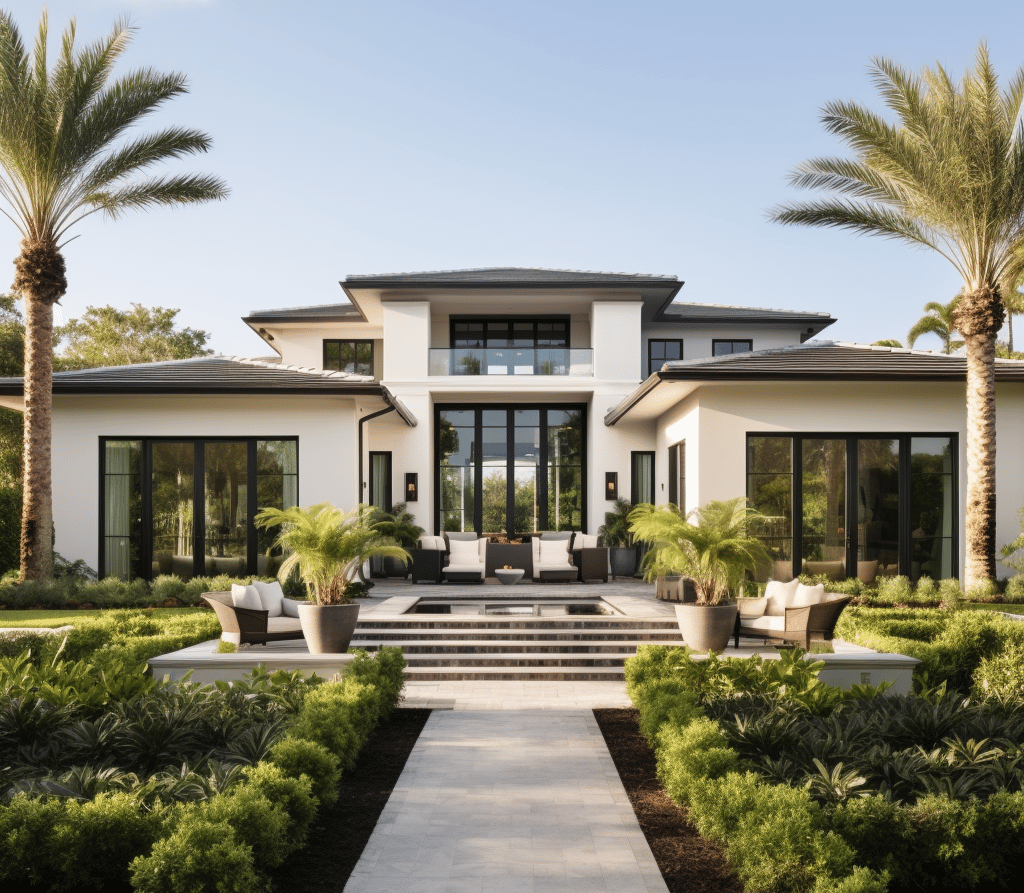
In Landmark Ranch Estates, the picture inverts. The gated community of 44 custom homes on 2 to 5 acre lots has recently shown active listings averaging close to $6 million at roughly $692 per square foot. That is a market where scarcity, not softness, sets the tone. Forty-four total homes ever built, a handful for sale at any given time, and buyers who are not price-sensitive in the way a $900,000 acreage shopper is.
Blend those two enclaves into a single townwide median and you get exactly the kind of number Zillow's average home value snapshot showed for June 2026: $1,466,616, up a modest 1.6 percent for the year. That figure isn't wrong. It's just describing a blend of a correction and a boom, and the blend itself tells you nothing about what either buyer actually experienced.
A townwide median built from enclaves this small isn't measuring a market. It's measuring whichever handful of homes happened to close that month.
Why the top keeps closing while the middle sits
The upper tier of Southwest Ranches has a buyer pool that behaves differently from the rest of the town, and that difference shows up in the data as well as in the neighborhood itself. The town has a documented run of high-profile buyers, with celebrity homeowners including Dwayne "The Rock" Johnson, Gisele Bündchen, Udonis Haslem, and Flo Rida among those who have owned property there, according to reporting from NBC6 South Florida. The same reporting noted a recent buyer paying close to $7 million for a Southwest Ranches estate, drawn by the combination of acreage, privacy, and a house that reads as a genuine estate rather than a large suburban lot.
That kind of buyer is largely insulated from the forces slowing the rest of the market. Miami Realtors' August 2026 report found that 60 percent of million-dollar sales across the region closed in cash, which means financing timelines, rate sensitivity, and appraisal gaps that stall a conventional buyer at the $1 million mark simply don't apply at the top. A cash buyer looking at a five-acre gated estate isn't waiting out a rate environment. They're deciding between three available homes in a community that only ever built 44.
Meanwhile, the entry-level acreage tier, the roughly $900,000 to $1.5 million range where much of Sunshine Ranches sits, is exactly where financed buyers live, and it's exactly the segment showing longer days on market and steeper price cuts. It's not that Southwest Ranches buyers disappeared. It's that the buyers who remained active split cleanly by how they pay.
What this means if you're comparing this month's number to last year's
If you're sizing up Southwest Ranches against another West Broward market, the townwide median is the least useful number available to you, not because it's inaccurate, but because it answers a question you didn't ask. The question that actually matters is which enclave, which price tier, and which buyer pool you're stepping into.
A few practical anchors as of mid-September 2026: active MLS listings for the town numbered 69 properties as of September 10, a count within the range of 60 to over 130 listings various portals were reporting earlier in the year, which itself is a reminder that inventory counts shift depending on when you check and which feed you're looking at. Days on market has run anywhere from the mid-80s to over 200 depending on which enclave and which data source you're reading, and that range is the point. There is no single days-on-market figure for Southwest Ranches worth memorizing. There's a range, and your property or your target property sits somewhere specific inside it.
If you're selling in the $900,000 to $1.5 million acreage tier, price against recent closings in your own enclave, not the townwide median, and expect a longer runway to contract than the headline number suggests. If you're shopping the gated, ultra-luxury tier, expect a market that behaves like a much tighter, cash-driven segment where a handful of comparable sales carries more weight than any citywide statistic.
Frequently asked questions
Does a falling townwide median mean Southwest Ranches has become a buyer's market across the board? Not evenly. The entry-level acreage tier has shown real price softening and longer days on market. The gated, ultra-luxury tier, where inventory is scarcest and cash buyers dominate, has kept closing at or near asking in the same months.
Why do different sites show such different active listing counts for the same town? Each portal pulls from different feeds on different update schedules, and Southwest Ranches has few enough total listings that even a handful of new or expired listings shifts the total noticeably from one snapshot to the next.
What should I actually compare my offer or asking price to? Recent closings within your specific enclave and acreage range, not the townwide median. A one-acre Sunshine Ranches property and a five-acre Landmark Ranch Estates estate are not competing for the same buyer, and pricing one against the other's market conditions will mislead you either way.
If you're trying to figure out where your own property, or your search, actually fits inside this split, that's exactly the kind of read a hyperlocal conversation settles faster than another portal refresh. Alex Fernandez works this corridor enclave by enclave, and a private consultation is the fastest way to see where your number really sits.