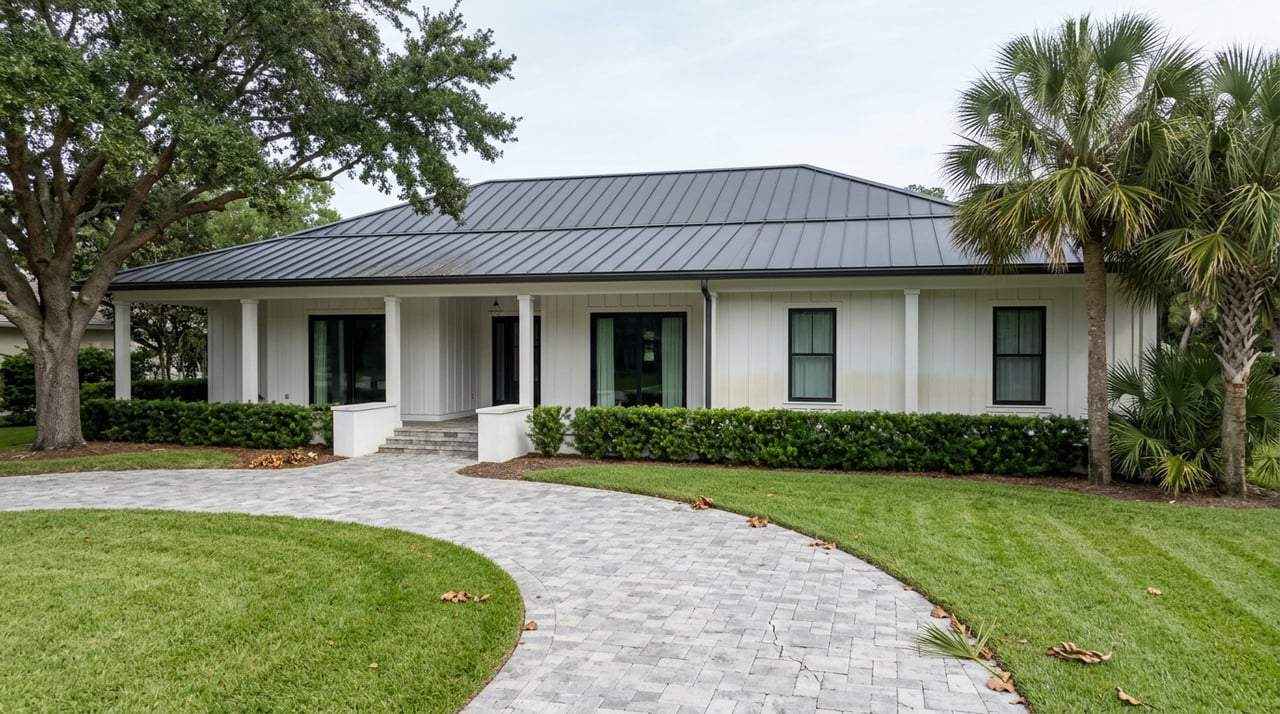
A seller in Weston lists the house, gets an offer, and a week before closing receives a letter from the City with a name on it many owners have never noticed on their own tax bill: Bonaventure Development District assessment due. The panic that follows is predictable. They call their agent asking whether they now owe a lump-sum bond payoff before the sale can close, because every article they find online about Florida "CDD fees" describes exactly that scenario. Here is the problem: Weston's district isn't the kind of CDD those articles are describing, and reading it as one is how sellers waste a week solving a problem they don't have.
What the letter actually is
The City of Weston runs two special taxing districts that show up on every resident's non-ad valorem tax bill: Indian Trace Development District and the Bonaventure Development District, often shortened to BDD. Both fund things like stormwater management, rights-of-way, and capital projects, and both get collected the same way your fire assessment and solid waste fee do, as a line item on the annual property tax bill rather than a separate invoice from a homeowners association.
That's the first thing that trips up anyone who's read a generic Florida CDD guide. Most of those guides, and there are dozens ranking for "what is a CDD fee in Florida," describe communities in Lakewood Ranch, Horizon West, or Naples where a developer-controlled board issues bonds, hires a district manager, and sends its own resale disclosure and its own estoppel letter separate from the county tax collector. Weston doesn't work that way. The City Commission sits as the governing board for both districts, the City Clerk handles the paperwork, and the City Attorney represents them legally. There is no separate district office to call. There's City Hall.
The distinction the City itself draws
Ask the City of Weston directly whether Bonaventure is a CDD and the answer on record is no. The Bonaventure Development District was created under Florida Statute Chapter 189, as a dependent special district, not under Chapter 190, which is the statute that defines a true Community Development District. Indian Trace has a more layered history. It started in 1975 as a special municipal tax district, was reestablished in 1981 as a Community Development District under Chapter 190, and then, when Weston incorporated as a city in 1996, was folded into the new City Charter as a dependent special district of the municipality itself.
That last step matters more than it sounds. A textbook Chapter 190 CDD keeps its own independent board that transitions from developer control to homeowner control as the community builds out. Indian Trace didn't transition to a homeowner board. It transitioned into the City of Weston's own government structure. Practically, that means when you're comparing a Weston listing to one in a typical Florida CDD community, you're not comparing two versions of the same mechanism. You're comparing a city-administered assessment to a semi-private one, and the comparison most online calculators run doesn't hold.
The bond number that's actually outdated in most people's heads
Here's the fact that changes how a seller should think about this letter. The Bonaventure assessment sellers are being told about today traces back to bonds issued in January 2002, in the amount of $12,790,000, to fund capital improvements under the Bonaventure Master Plan and the acquisition of the Keep Bonaventure Beautiful Corporation. Those bonds matured on November 1, 2022.
That's not a typo and it's not ancient history. It means anyone assuming a fresh, decades-long debt-service obligation is riding on a current Bonaventure-area listing is working from an assumption that expired in 2022. The debt-service piece of that original bond issue is done. What continues, indefinitely, is the separate operations and maintenance assessment that funds the ongoing upkeep the district still performs. The two get bundled into the same non-ad valorem line on your tax bill, which is exactly why a letter mentioning "assessments due" reads like a bond payoff notice even when it isn't one anymore.
How this compares to a standard Florida CDD
| Typical Florida CDD (Ch. 190) | Weston's Indian Trace / Bonaventure | |
|---|---|---|
| Governing board | Developer-controlled, later elected homeowners | City Commission, ex-officio |
| Statute | Chapter 190 | Chapter 189 (BDD); Chapter 190 origin, now city-administered (Indian Trace) |
| Who bills you | District manager, separate from county tax bill | City of Weston, folded into the same TRIM notice as fire and solid waste |
| Who issues the estoppel | Private district office | City of Weston Finance Department, via online request |
| Bond status you should verify | Confirm current balance with district manager | Confirm current status directly; Bonaventure's original 2002 bond matured Nov. 1, 2022 |
Why the ZIP code line matters more than the median price
Anyone comparing neighborhoods by Weston's citywide median home price is missing where the real variation sits. Property tax data on Weston homes shows a real spread by ZIP code. Homes in 33326 carry a median effective tax rate around 1.52 percent, while 33331 runs closer to 1.29 percent, and median annual tax bills range from roughly $7,471 in 33326 up toward $12,252 in 33332. Some of that spread comes from assessed value differences and Save Our Homes caps that reset at sale. Some of it comes from exactly the mechanism above: whether a given parcel sits inside Indian Trace, inside Bonaventure, or outside both districts entirely changes what shows up on that non-ad valorem line every single year you own the home.
A buyer comparing two similarly priced Weston listings in different ZIP codes should ask which district, if either, the parcel sits within before assuming the tax lines will match. They often don't.
What this means at the closing table
Two mechanics matter more than the letter's tone suggests.
First, the assessment lien on a Weston property does not have to be paid in full for the sale to close. The City's own guidance to sellers is direct on this point: if you receive a letter about outstanding Bonaventure or Indian Trace assessments while under contract, the new owner simply assumes the remaining prorated payments as part of their annual tax bill going forward, unless the parties agree to prepay it at closing. That's a negotiation point between buyer and seller, not a closing prerequisite.
Second, the estoppel itself takes real lead time. Weston moved its estoppel and lien search request to a fully electronic system through its Accela portal, but the search is still performed manually by city staff, and turnaround isn't instant. Any Florida closing involving an HOA estoppel separately carries up to a 10-business-day statutory window for the association to produce that document. Building both timelines into your listing prep, rather than discovering them the week of closing, is the difference between a clean file and a scramble.
FAQ
Is my Weston home definitely inside Indian Trace or Bonaventure? Not every Weston parcel sits inside either district. Your TRIM notice, mailed by the Broward County Property Appraiser every August, lists every non-ad valorem assessment tied to your specific parcel, including whether Indian Trace or BDD applies to you.
Does the Bonaventure bond maturing in 2022 mean the assessment went away? No. The debt-service portion tied to that specific 2002 bond issue is retired, but the district's operations and maintenance assessment continues as long as the district operates. Expect a line item, just not the original bond-repayment number.
Who do I contact to confirm the current balance before listing? Request an estoppel or lien search directly through the City of Weston's Finance Department, not a private HOA management company, since both districts are administered by the city.
Should I appeal my assessed value while I'm reviewing this? If you think your assessed value is too high, Broward County's appeal window for the current tax year closes September 17, 2026. That's a separate process from the special assessment questions above, but it's worth checking both at once if you're preparing to list.
Weston's tax bill rewards buyers and sellers who read the fine print rather than the internet's average explanation of it. If you're weighing a purchase or preparing to list in Weston, Davie, or Southwest Ranches and want someone who already knows which district line applies to your specific parcel, Alex Fernandez can walk through it with you. Schedule a Private Consultation before you put a number on paper.